Why Your Lawn Looks Worse After Summer and What You Can Do About It
Summer is when we spend the most time enjoying our lawns, but it's also when our grass takes the biggest beating. Between hot temperatures, dry conditions, pets, kids playing outside, and everyday foot traffic, your lawn can start looking a little rough by the time September rolls around.
If you've noticed brown patches, thinning grass, or weeds taking over, you're not alone.
The good news is that your lawn isn't necessarily beyond repair. September is a great time to figure out what's going wrong and start getting your grass back on track.
At Cutting Edge Services, we help homeowners throughout the Quad Cities maintain healthier, stronger lawns with professional lawn care designed for the challenges of Midwest weather.
Why Does Your Lawn Look So Rough After Summer?
Even lawns that looked great in May and June can struggle by the end of August.
There are several common reasons your grass might not be looking its best:
• Heat stress: Long stretches of hot weather can cause grass to turn brown or stop growing.
• Compacted soil: Regular foot traffic, pets, and lawn equipment can make it harder for water and nutrients to reach the roots.
• Inconsistent watering: Too much or too little water can weaken your lawn and create uneven growth.
• Weed competition: Weeds compete with grass for moisture, sunlight, and nutrients.
• Everyday wear: Backyard activities and pets can leave thin or damaged areas throughout the lawn.
The important thing is identifying what's causing the problem before deciding how to fix it.
Brown Grass Doesn't Always Mean Dead Grass
One of the biggest misconceptions homeowners have is that brown grass is automatically dead.
During periods of intense heat or drought, many cool-season grasses commonly found in the Quad Cities can enter dormancy. This is a natural response that helps grass conserve energy when growing conditions aren't ideal.
As temperatures cool and moisture becomes more consistent, dormant grass may begin turning green again.
However, if certain areas remain brown while the rest of your lawn recovers, there could be another issue, such as damaged roots, disease, or areas where the grass has died.
Understanding the difference can save you from spending money on treatments your lawn doesn't actually need.
September Is Your Opportunity to Turn Things Around
Here's something many homeowners don't realize: fall is one of the most important growing periods for cool-season lawns in Iowa and Illinois.
As temperatures begin to drop, grass experiences less heat stress and can put more energy into root development.
That makes September an excellent time to address many of the problems that developed throughout summer.
Depending on your lawn's condition, professional care may include:
• Fall fertilization to provide nutrients that support healthy growth and root development
• Weed control to help manage unwanted plants competing with your grass
• Overseeding to help fill thin or bare areas with new grass
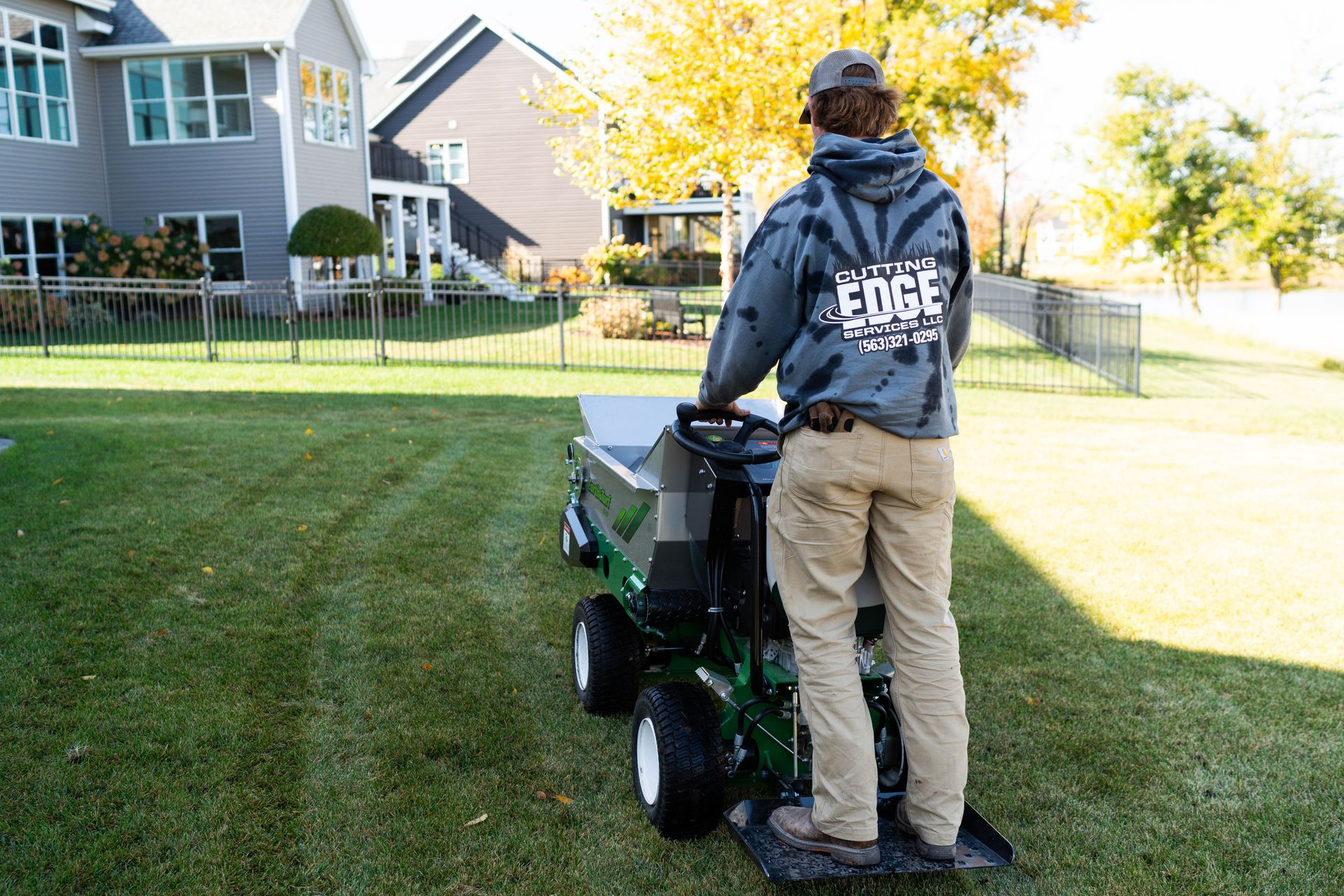
• Core aeration to relieve compacted soil and improve access to water and nutrients
• Lawn assessments to identify underlying problems before they become more serious
Not every lawn needs every service. The right approach depends on what's happening beneath the surface and how your grass responds to changing conditions.
A Healthy Lawn Starts With Consistent Care
It's easy to focus on lawn care when your grass starts turning brown or weeds become noticeable.
But the best-looking lawns usually aren't the result of one treatment. They're the result of consistent attention throughout the growing season.
Proper mowing, watering, fertilization, and weed management all work together to support healthier grass.
For example, mowing too short can leave grass more vulnerable to heat stress. Inconsistent watering can encourage shallow root development. Skipping seasonal treatments can allow weeds to establish themselves and compete with your turf.
Taking care of these things throughout the year helps reduce the amount of recovery work your lawn needs after a difficult summer.
Don't Wait Until Spring to Address Lawn Problems
When the weather starts cooling down, it's tempting to put lawn care on the back burner until next year.
But waiting until spring means missing an important opportunity to improve your lawn before winter.
Addressing thin grass, nutrient needs, and weed problems in the fall can help your lawn enter the next growing season in better condition.
And if you've been considering professional lawn care, September is a great time to start the conversation.
Let Cutting Edge Help Get Your Lawn Back on Track
Your lawn has been through a lot this summer. Now it's time to give it the attention it needs.
Whether you're dealing with thinning grass, stubborn weeds, or a lawn that simply isn't looking as healthy as it used to, Cutting Edge Services can help you determine the next steps.
We provide professional lawn care services throughout the Quad Cities, helping homeowners build stronger, healthier lawns with treatments tailored to their property's needs.
Ready to get your lawn back on track?
Explore Our Lawn Treatment Program
Contact Cutting Edge Services today to learn more about your options and start preparing your lawn for the seasons ahead.